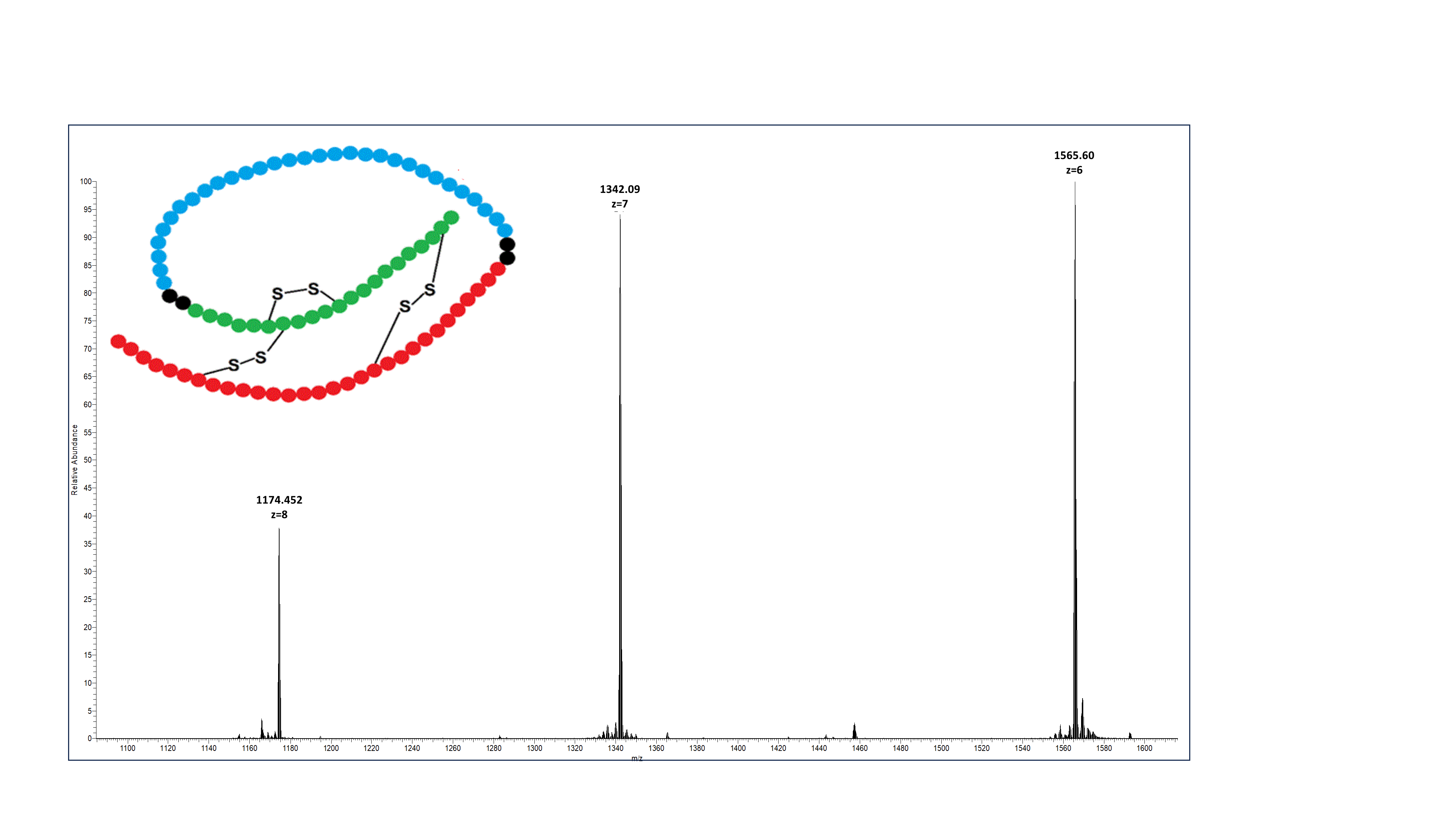
The Peptidomics and Proteomics Core offers mass spectrometric based support for researchers at the IMS-MRL, University of Cambridge, wider academic community and industry partners. We can perform both untargeted and targeted analyses of analytes in a variety of sample types, including plasma, tissue, cell and organoid cultures and their supernatants.
Instrumentation
SCIEX 7600 Zeno ToF high resolution mass spectrometer. This instrument is used to identify and quantify peptides and proteins in a variety of matrices. We have extensive experience in plasma peptidomics and proteomics, as well as tissue extracts, primary and organoid culture supernatant analyses.
Thermo Q-Exactive plus Orbitrap high resolution mass spectrometer. This instrument is shared with the CMALL core, and is used for low sensitivity work, including the targeted analysis of small and large molecules in tissues and blood samples.
Waters TQ-XS triple quadrupole with IonKey source. This system is used for high sensitivity peptide and protein quantitation studies. We can quantify compounds in blood down to low pg/mL levels (analyte dependant). We have a number of qualified assays to measure gut hormones in plasma in feeding studies. Bespoke LC-MS/MS methods can be developed quickly to aid researchers with plasma quantitation studies.
Bioinformatics analyses are performed on the PEAKS studio software. This is used for Peptidomics and proteomics projects and can identify the presence of post translational modifications such as glycosylation and phosphorylation.
Key publications
Oxidised Apolipoprotein Peptidome Characterises Metabolic Dysfunction‐Associated Steatotic Liver Disease. Liver International 45: 2 (2025)
https://doi.org/10.1111/liv.16200
GDF15 linked to maternal risk of nausea and vomiting during pregnancy. Nature volume 625, pages760–767 (2024)
https://doi.org/10.1038/s41586-023-06921-9
Labeling and Characterization of Human GLP-1-Secreting L-cells in Primary Ileal Organoid Culture. Cell Reports 31, 107833 (2020)
https://doi.org/10.1016/j.celrep.2020.107833
Important Role of the GLP-1 Axis for Glucose Homeostasis after Bariatric Surgery. Cell Reports 26, 1399–1408 (2019).
https://doi.org/10.1016/j.celrep.2019.01.047
Comparison of Human and Murine Enteroendocrine Cells by Transcriptomic and Peptidomic Profiling. Diabetes 68(5):1062–1072 (2019)
https://doi.org/10.2337/db18-0883
Trophoblast organoids as a model for maternal–fetal interactions during human placentation. Nature 564, 263–267 (2018).
https://doi.org/10.1038/s41586-018-0753-3
Videos
LC-MS analysis of plasma from patients with insulin autoimmune syndrome
Analyzing intact Peptides using LC-MS for Translational Research